
Are Felt Ornaments Safe? A Family Guide to Soft Christmas Decorations
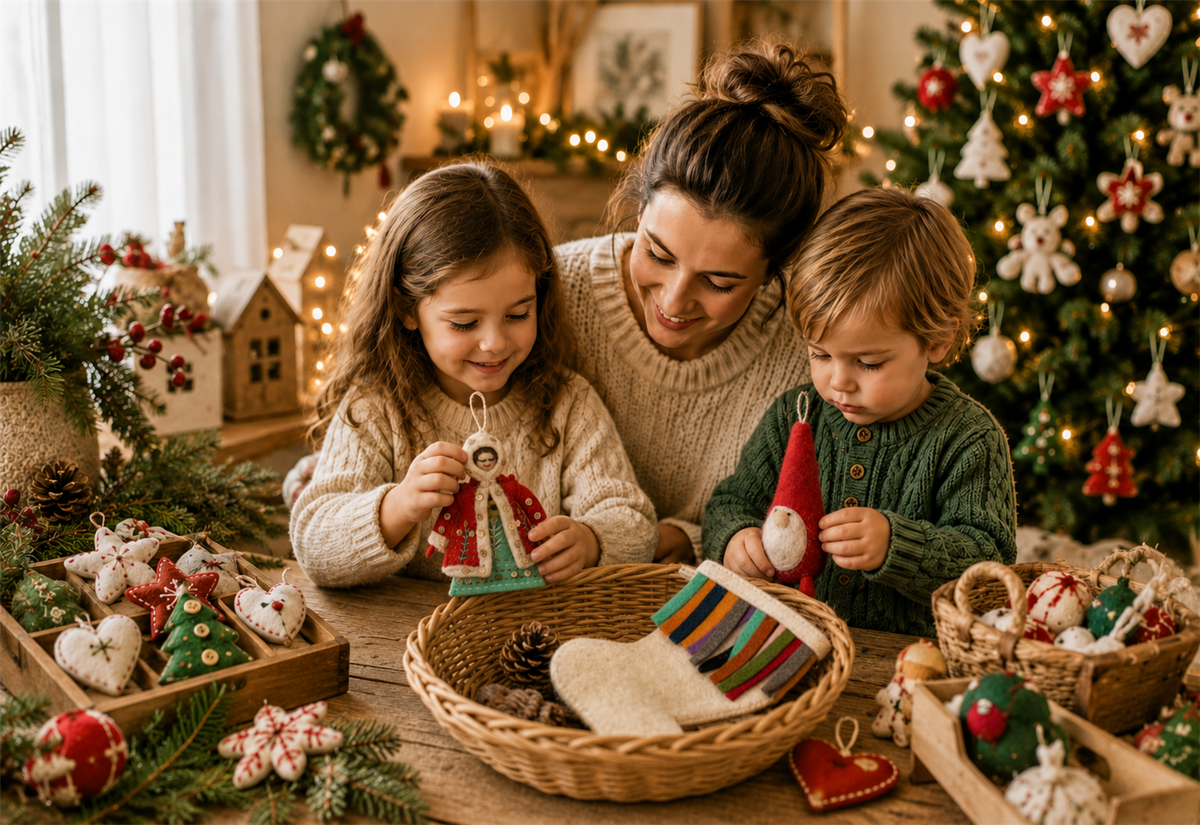
Felt ornaments can be a thoughtful choice for family Christmas trees because they do not create sharp glass shards when dropped.
But "soft" does not automatically mean "safe for babies," "safe for toddlers," "pet-safe" or "safe as a toy."
A wool felt ornament may still include small bells, beads, buttons, wire, hanging cords, detachable trims, batteries or food-like details that can create risks in a home with young children or pets. The safest approach is to assess the exact ornament, place it appropriately, and treat decorative ornaments as décor unless they are specifically designed, tested and labelled for play.
For many households, the best setup is a mixed tree: soft handmade wool decorations in lower-contact areas, with delicate or breakable ornaments reserved for higher branches or protected displays.
TL;DR
- Felt ornaments are generally a lower-shard-risk alternative to glass ornaments because they do not break into sharp glass pieces.
- Felt ornaments are not automatically child-safe or toy-safe.
- Avoid low-hanging decorations with small removable parts, wire, bells, beads, batteries or food-like shapes in homes with very young children.
- Treat handmade wool ornaments as decorative pieces unless the maker clearly states that they are designed and tested as toys.
- Place the safest, simplest decorations on lower tree branches and keep fragile or detailed ornaments higher up.
- Check hanging loops, loose trims and construction before displaying ornaments each year.
Are Felt Ornaments Safe?
Felt ornaments can be safer than glass ornaments for tree display because they do not create sharp shards when dropped. However, they are not automatically safe for children, babies or pets.
A simple wool felt ornament with securely sewn details may be a better choice than a breakable glass bauble in a busy family home. But safety depends on the whole ornament, not only the felt.
Before placing an ornament within a child's reach, check for:
- Detachable beads, bells, buttons or sequins
- Small stitched eyes, noses or accessories
- Wire, metal hooks or sharp internal supports
- Long cords or hanging loops
- Loose stuffing or fibres
- Batteries in musical or illuminated ornaments
- Candy, cookie or food-like designs that may invite mouthing
- Damage that could make components come loose
The safest ornament is not simply the softest one. It is the one that is appropriate for the child's age, the household and its intended use.
What Felt Ornaments Do, and Do Not, Solve
| Concern | What a Simple Felt Ornament Can Help With | What Still Needs Attention |
|---|---|---|
| Breakage | It does not create glass shards if dropped | Hard attachments, hooks or wire can still cause injury |
| Tree styling | Adds soft texture and visual warmth | Softness does not make it a toy |
| Young children | Can be a better lower-branch choice than fragile glass | Small parts and cords must still stay out of reach |
| Pets | Reduces the risk from broken glass | Pets may chew, swallow or pull decorative components |
| Storage | Less likely to crack in a box | Wool can still be crushed, snagged or damaged by moisture |
| Gifting | Feels tactile and meaningful | Age suitability must be checked before gifting to a child |
Felt Ornaments vs Glass Ornaments for Family Trees
Glass and felt serve different purposes.
Glass ornaments bring reflection, sparkle and traditional festive light. Felt ornaments bring softness, texture and handmade character.
For homes with young children, the Consumer Product Safety Commission advises families to avoid sharp or breakable decorations and to keep trimmings with small removable parts out of reach.
| Feature | Wool Felt Ornaments | Glass Ornaments |
|---|---|---|
| If dropped | No glass shards | Can crack, chip or shatter |
| Surface | Soft and matte | Hard and reflective |
| Best placement | Lower-contact areas, subject to component checks | Higher branches or protected displays |
| Main risk to manage | Small parts, cords, trims and decorative attachments | Breakage, sharp fragments and small removable components |
| Best use | Texture, character, handmade collections | Sparkle, light and classic bauble styling |
The right choice is often not felt instead of glass. It is choosing the right material for the right part of the tree.
A Child-Conscious Tree: Use Ornament Zones
A family tree does not need to look like a compromise.
Use placement to create a safer, more practical display.
Lower Branches: Simple and Soft
Use the lower third of the tree for the simplest ornaments.
Good candidates include:
- Plain wool felt stars
- Securely stitched felt shapes
- Larger soft ornaments without removable trims
- Wooden or fabric ornaments designed for decorative use
- Family-made paper decorations, placed out of mouthing range where needed
Avoid lower branches for:
- Glass ornaments
- Small bells, beads, buttons or sequins
- Metal hooks
- Food-like ornaments
- Battery-operated ornaments
- Dangling wire or long cords
- Tiny collectible decorations
Middle Branches: Supervised Detail
The middle section can hold handmade characters and more detailed ornaments when children are old enough to understand that they are for looking, not playing.
Use sturdy hanging loops and inspect decorative elements before the tree goes up.
Upper Branches: Delicate and Collectible
Reserve the upper tree for:
- Glass baubles
- Vintage ornaments
- Fine needle-felted figures
- Family heirlooms
- Limited-edition pieces
- Ornaments with small decorative attachments
This arrangement helps protect the collection while still allowing every material to have its place.
Felt Ornament or Toy? The Difference Matters
A felt ornament can look playful without being a toy.
An ornament is designed to decorate a tree, wreath, shelf or festive display. A toy is designed or intended for children's play and is subject to different safety expectations.
Do not assume that a handmade animal, felt character or soft Christmas ornament is suitable for play simply because it looks cuddly.
Treat an ornament as décor when it has:
- A hanging loop or cord
- Decorative wire or metal components
- Small stitched or attached parts
- Beads, bells, buttons or sequins
- A delicate hand-finished form
- Collectible or heirloom value
- No clear age guidance or toy-safety statement
Consider a product for play only when:
- The seller clearly identifies it as a children's toy
- The product includes appropriate age guidance
- The manufacturer provides relevant safety information
- Construction, materials and components have been assessed for the intended market
- The product is designed for handling, mouthing and play, not only display
Calling an ornament "soft" is not the same as proving it is safe for play.
Expert Insight: Choose the Right Risk to Remove
The CPSC's guidance is direct: avoid decorations that are sharp or breakable.
For a family tree, wool felt can remove one important risk: broken glass.
But a lower-risk material is only one part of safe decorating. Placement, supervision, secure construction and age-appropriate choices matter just as much.
Case Study: The Lower-Branch Rule
Public holiday-safety guidance repeatedly makes the same distinction: avoid sharp or breakable decorations around small children, and keep decorations with removable small parts out of reach.
Applied to a Christmas tree, that creates a practical styling principle:
- Put soft, simple ornaments lower down.
- Keep detailed collectible ornaments higher up.
- Do not use lower branches as a toy basket.
- Reassess the setup as children grow and become more mobile.
This approach lets a family enjoy a richly decorated tree without treating every ornament as equally suitable for every location.
Case Study: When an Ornament Becomes a Children's Product
The same wool character can sit in two very different product categories.
A handmade felt fox with a hanging loop, decorative scarf and tiny stitched details may be a beautiful tree ornament. But if it is marketed for play to children, the product requires a different level of safety assessment, construction review and market-specific compliance.
That distinction protects both families and makers.
For FELTORA, festive characters should be described as decorative ornaments unless a specific item has been intentionally designed, tested and documented as a toy.
A Useful Holiday Safety Statistic
The CPSC reports that there are about 160 Christmas decorating-related injuries each day during the holiday season, and nearly half involve falls.
This statistic is not about felt ornaments specifically. It is a reminder that safer holiday decorating is not achieved through material choice alone.
A thoughtful tree also means:
- Using a stable step stool or ladder
- Keeping tree lights, candles and cords in good condition
- Avoiding overloaded branches
- Keeping flames away from decorations
- Choosing ornament placement with children and pets in mind
Buying Checklist: Are These Felt Ornaments Right for My Home?
Before buying felt Christmas ornaments, ask:
Construction
- Is the ornament clearly described as wool felt, wool blend or synthetic felt?
- Is the hanging loop secure?
- Are stitched details firmly attached?
- Does the ornament include wire, bells, beads, buttons or sequins?
- Are there battery-powered features?
Household Fit
- Will a child under three be near the tree?
- Does anyone in the home have a habit of mouthing, pulling or chewing decorations?
- Will pets have access to the lower branches?
- Is the ornament intended for a main tree, a nursery display, a tabletop tree or a gift box?
Product Information
- Does the brand state that the item is décor or a toy?
- Is there age guidance where relevant?
- Are materials and care instructions clear?
- Does the product page show close-up images of attachments and hanging loops?
- Does the maker explain handmade variation honestly?
A good product page should help you make a decision, not make you guess.
Safety Language That Helps Shoppers
For decorative felt ornaments, clear language builds trust.
Better Product Language
- Soft handmade wool ornament for decorative use
- Shatter-free alternative to glass for tree styling
- Decorative ornament; not intended as a toy
- Keep small decorative components out of reach of young children
- Place detailed ornaments on higher branches in homes with toddlers or pets
- Handmade variation is expected
Language to Avoid Without Product-Specific Evidence
- Child-safe
- Baby-safe
- Toddler-safe
- Pet-safe
- Non-toxic
- Safe to chew
- Toy-safe
- Safe for all ages
- Unbreakable
A responsible claim explains what the product does, not what it cannot guarantee.
What About Pets?
A felt ornament may remove the danger of shattered glass, but it is not automatically pet-safe.
Pets may chew, tug, swallow or damage:
- Hanging cords
- Bells
- Beads
- Wire
- Buttons
- Small decorative trims
- Battery compartments
Health Canada advises keeping ornaments with sharp, breakable, metal or small removable parts away from young children and pets.
For homes with curious pets, use simple decorations lower down and reserve detailed handmade ornaments for higher branches, shelves or protected displays.
What About Fire and Lights?
Do not assume that a wool ornament is fire-safe simply because it is natural or soft.
Keep all decorations away from candles, fireplaces, hot bulbs and damaged electrical lights. Never leave burning candles unattended, and use lights according to their instructions.
Soft Christmas décor should be treated as décor, not as a flame-resistant barrier or a material for direct contact with lighting.
How to Care for Felt Ornaments So They Stay Safer Each Year
Inspect ornaments before decorating and before packing them away.
Seasonal Safety Check
- Check hanging loops for strain.
- Look for loose threads or detached trims.
- Remove damaged hooks before storing.
- Keep ornaments dry and away from moisture.
- Store detailed felt ornaments separately from hard glass or metal pieces.
- Repair or retire ornaments with loose components.
- Do not display ornaments with exposed wire, unstable beads or damaged battery compartments.
A well-kept ornament is less likely to create unexpected problems when it returns to the tree next year.
Read more
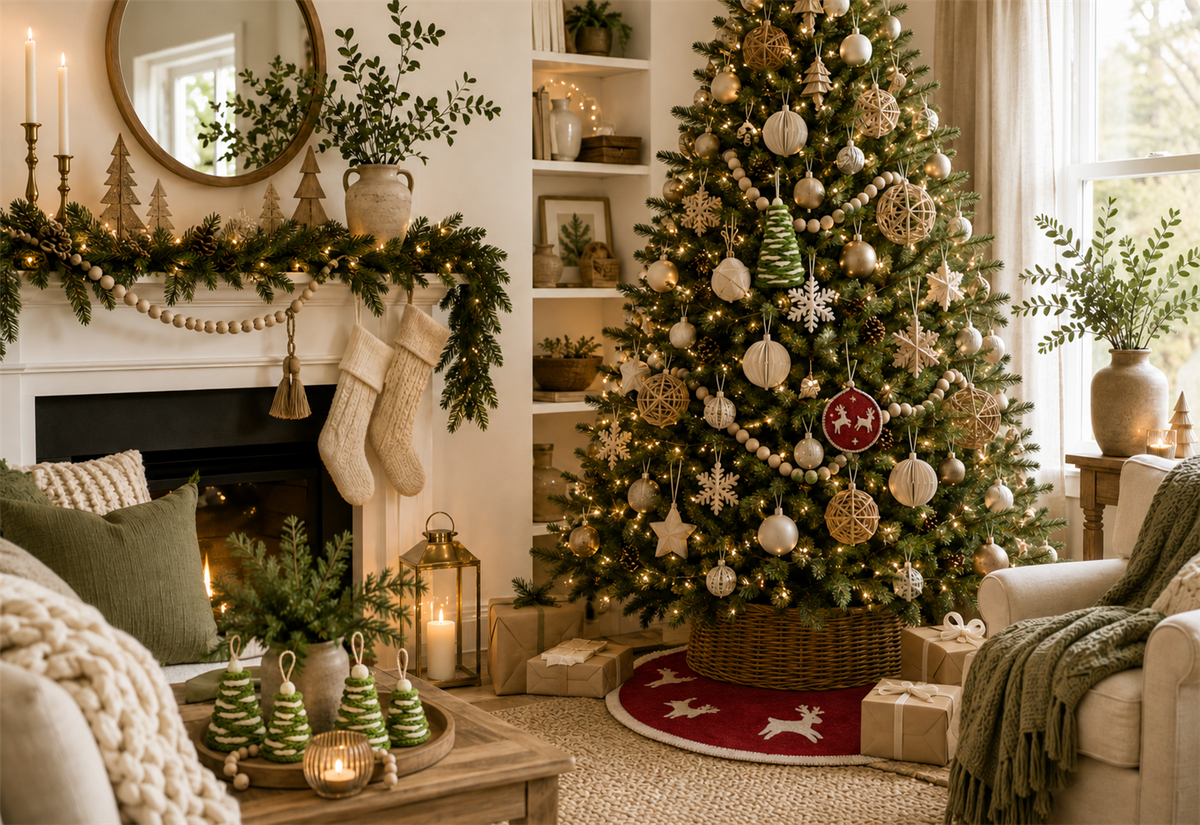
Neutral Christmas Tree Décor: How to Style a Warm, Natural Tree
The secret to making a neutral tree feel beautiful rather than bare is texture. Wool felt ornaments, wood decorations, linen ribbon, paper stars, dried oranges, ceramic bells, velvet bows, and soft...
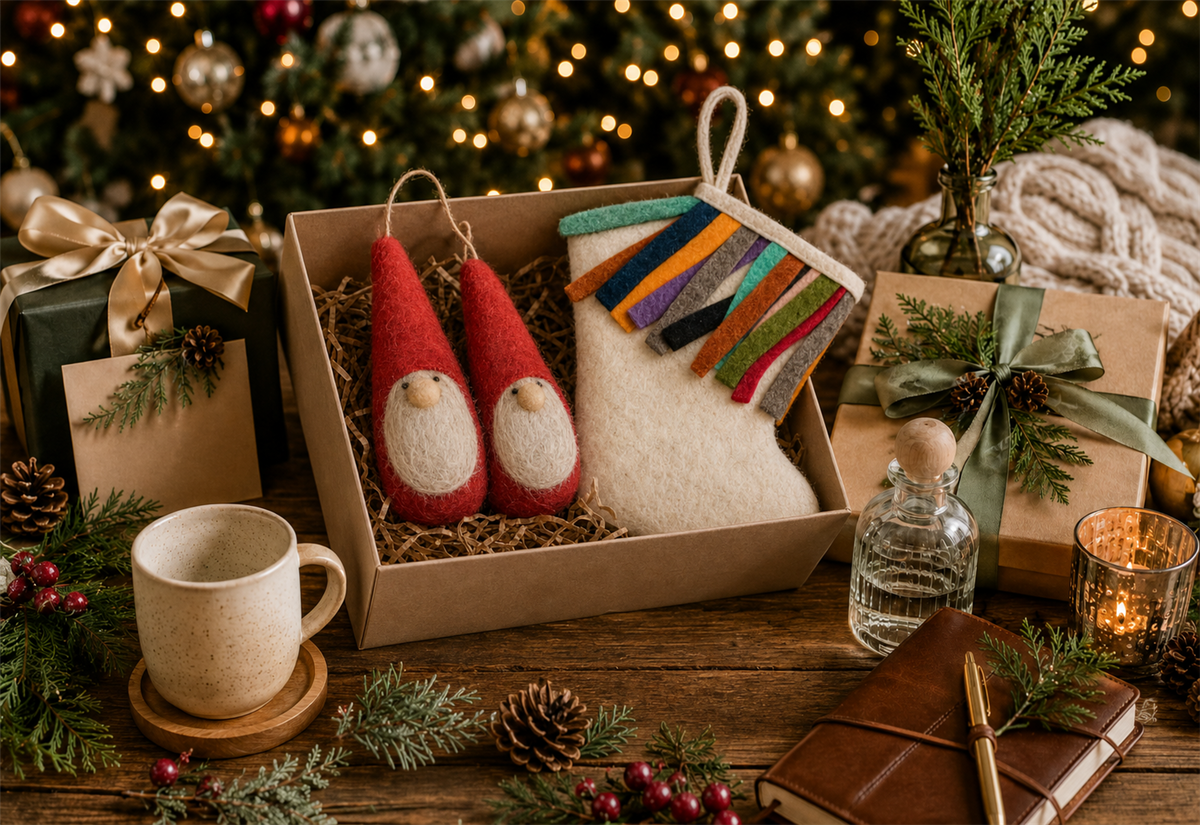
Christmas Gifts for Someone Who Has Everything: Meaningful Ideas They’ll Actually Keep
Buying Christmas gifts for someone who has everything is not about finding something they lack. It is about finding something they will remember.
Follow us for more stories.


frequently asked questions
Looking for a quick answer? Our frequently asked questions are regularly updated for our most common customer queries.